

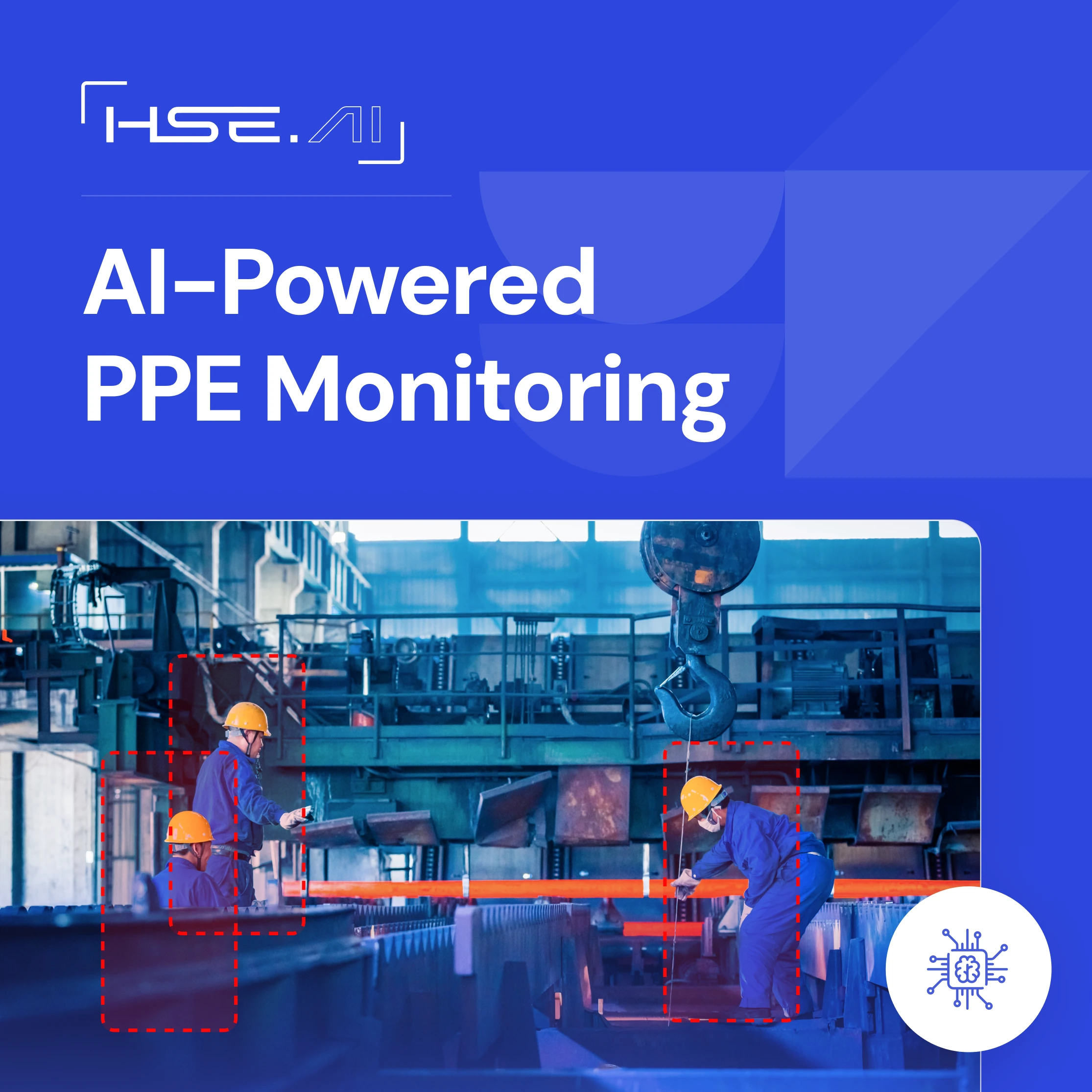
AI-powered PPE monitoring uses AI-driven computer vision and deep learning to automatically detect whether workers are wearing required personal protective equipment such as helmets, gloves, vests, face shields, and boots in real time, replacing slow, manual checks with continuous autonomous surveillance.
This technology enhances workplace safety with AI-powered PPE by generating real-time alerts when violations occur, enabling instant corrective action and reducing the risk of accidents before they happen.
AI-powered PPE monitoring is an AI-driven safety compliance technology that uses computer vision and deep learning to automatically analyze video feeds and ensure PPE compliance by detecting whether workers are wearing required protective gear like helmets, gloves, vests, and masks in real-time. It replaces traditional manual inspections with automated, continuous surveillance that instantly flags safety violations and triggers alerts for immediate action.
PPE monitoring is essential for enhancing worker safety because it ensures that every employee consistently wears required safety gear, significantly reducing the frequency and severity of workplace injuries and illnesses. Proper PPE use acts as the first line of defense against hazards like impacts, chemicals, and airborne risks, preventing serious harm before it occurs.
By enforcing PPE compliance with real-time monitoring and alerts, organizations can uphold safety protocols more effectively than manual checks, lowering risks of accidents and costly legal penalties for non-compliance.
Consistent monitoring also fosters a stronger safety culture, where employees understand the importance of PPE standards, feel protected, and are more engaged in maintaining a secure work environment.
Ultimately, proactive PPE monitoring not only protects workers but helps organizations uphold safety standards, improve productivity, and demonstrate a genuine commitment to workforce wellbeing.
AI-powered PPE systems integrate with AI cameras and existing CCTV video feeds to continuously scan worksites, construction zones, warehouses, or any monitored area for PPE compliance without the need for manual supervision. These PPE detection cameras capture live footage that feeds into the AI system for analysis, turning standard surveillance into AI-powered surveillance for safety compliance.
At the core lies computer vision, where AI analyzes video frames to detect PPE items like helmets, vests, gloves, safety glasses, or masks on workers. Advanced object detection systems identify human forms and check for required gear in predefined zones, flagging any non-compliance based on predefined safety rules.
The system uses AI models and deep learning technologies, These advanced AI models continually learn from additional data to improve detection performance and adapt to changing environments.
Once the AI analyzes a real-time video feed, it provides continuous monitoring and instantly triggers real-time alerts the moment a safety violation—such as missing or improperly worn PPE—is detected. Notifications can be routed to dashboards, supervisors’ devices, or safety managers so corrective action can be taken immediately, ensuring rapid enforcement of PPE compliance in real-time.
AI-powered PPE detection technology automates the identification of required safety gear (like helmets, high-visibility vests, gloves, and masks) by using advanced computer vision and deep learning models that continuously monitor video feeds for compliance with safety standards. These systems replace manual checks with automated PPE detection, improving accuracy and reducing the burden on safety teams.
Modern PPE detection solutions integrate with existing surveillance infrastructure, using AI-powered PPE detection software to analyze footage from CCTV or dedicated cameras, generate real-time alerts, and produce detailed compliance reports to help enforce safety protocols and regulatory requirements across industries.
Enterprise platforms offer scalable PPE monitoring systems that support rule customization for specific zones, centralized dashboards for trend insights, and integration with existing EHS and business intelligence systems, enabling organizations to improve operational safety and ensure consistent PPE compliance monitoring.
AI-powered systems monitor PPE usage by continuously analyzing video feeds to spot PPE non-compliance events—such as missing PPE or improperly worn safety gear—and immediately flag them for action. This automated oversight replaces slow, inconsistent manual PPE checks with continuous, objective surveillance that detects violations as they happen and not hours later during scheduled inspections.
When the system detects a PPE violation, like a worker without a helmet or vest where required, it generates real-time alerts to supervisors or safety teams, enabling quick corrective action that reduces the risk of accidents and reinforces safety protocols.
By logging violations with timestamps, video evidence, and compliance reports, AI-driven PPE monitoring systems provide organizations with visibility into patterns of non-compliance and support continuous improvement of safety practices and regulatory adherence.
AI-powered PPE detection systems are designed to recognize a wide range of personal protective equipment, enabling automated monitoring and real-time compliance tracking across industrial and construction environments. These systems can detect essential safety gear such as hard hats (helmets) to protect the head, high-visibility vests and reflective clothing for body visibility, and safety glasses or goggles for eye protection.
Beyond basic gear, advanced AI models also identify protective gloves for hand safety, face masks and respirators for respiratory protection, safety boots for foot protection, and harnesses or fall-protection equipment in specialized work zones.
Some systems extend detection to ear protection (earmuffs or earplugs) and other occupational PPE like belts, shields, and specialized clothing, offering comprehensive PPE detection technology that helps enforce correct PPE usage and elevate workplace safety standards.
AI-powered PPE monitoring systems go beyond simple detection to deliver advanced analytics and video analytics insights that help safety leaders understand trends in PPE compliance over time rather than just reacting to individual incidents. These platforms aggregate data from every monitored feed to identify patterns of non-compliance, high-risk zones, and times or shifts with lower PPE use, enabling targeted interventions and training programs.
With compliance reporting, systems automatically log every violation with timestamps, video evidence, and metadata, simplifying audit preparation and compliance monitoring for internal reviews or regulatory inspections, while dashboards visualize safety performance metrics at a glance.
These data-driven insights empower decision-makers to improve safety protocols, strengthen organizational safety culture, and demonstrate adherence to standards by turning video data into actionable safety strategies rather than reactive enforcement.
Construction Sites: On dynamic and high-risk construction sites, AI-powered PPE monitoring continuously checks for hardhat, safety vest, and protective eyewear compliance, detecting thousands of violations that human supervisors might miss and driving compliance rates up significantly, which helps reduce head and eye injuries and improve worksite safety culture.
Manufacturing & Industrial Facilities: In manufacturing environments with heavy machinery and shifting workflows, AI systems monitor PPE usage such as gloves, masks, and safety glasses on assembly lines, ensuring consistent PPE use across shifts and lowering the likelihood of injuries while keeping production moving.
Warehouses & Logistics: Fast-paced warehouses use AI to enforce PPE compliance like high-visibility vests in forklift zones and protective footwear areas, giving managers real-time visibility into safety adherence where manual monitoring is difficult.
Oil, Gas, & Hazardous Sites: In environments with specialized safety requirements, AI monitors compliance with full PPE protocols—including fire-resistant gear and respirators—helping organizations maintain strict safety standards and reduce incident risk even under complex conditions.
AI-powered PPE monitoring systems are built on a coordinated infrastructure of cameras, sensors, and networked detection systems that work together to provide continuous safety compliance. AI-enabled cameras act as the primary PPE sensors, capturing video feeds that feed into the PPE detection software for real-time analysis. These devices can integrate with existing CCTV infrastructure, reducing the need for costly hardware upgrades and making deployment scalable across multiple zones or sites.
Captured footage travels over a secure PPE network—often using Wi-Fi, Ethernet, or hybrid connectivity—to on-site edge processors or cloud servers running AI models. This network supports automated monitoring and detection systems that send instant alerts when PPE violations occur, enabling rapid response and reinforcing safety protocols without manual checks.
Advanced systems also support centralized dashboards and analytics platforms that integrate with enterprise safety management tools, allowing organizations to visualize compliance, diagnose problem areas, and generate audit-ready reports, which ensures consistent PPE monitoring and helps improve long-term safety outcomes.
The future of AI-driven PPE monitoring points toward smarter, more proactive solutions for PPE compliance that do far more than catch violations — they transform workplace safety. Advanced AI systems are evolving beyond simple detection to include predictive analytics and integration with wearables and IoT sensors, enabling organizations to anticipate risks and prevent incidents before they occur. This transition from reactive checks to predictive safety marks a fundamental shift in how workplaces manage risk and protect employees.
This website stores data such as cookies to enable site functionality including analytics and personalization. By using this website, you automatically accept that we use cookies.